The 15-Minute Monthly Car Check That Could Save You a Garage Visit
A simple 15-minute car maintenance checklist for UAE drivers. Learn how to check tyres, fluids, warning lights and your car's general condition.
By SiniDrive Editorial
Most of us have a simple relationship with our cars.
We get in. Start the engine. Turn on the AC. Drive away.
As long as nothing sounds strange and no warning light appears, everything must be fine.
Right?
Not always.
Cars can develop small problems long before they become obvious.
A tyre slowly loses pressure. A windscreen wiper starts cracking. A small fluid leak leaves a few drops under the engine.
You may not notice any of them during your normal morning drive.
That's why spending a few minutes checking your vehicle every month is worthwhile.
You don't need to be a mechanic. You just need to know what to look for.
And in the UAE, where extreme heat can put additional stress on vehicles, these checks are especially useful.
Minute 1–4: Check your tyres
Your tyres are the only parts of the vehicle in direct contact with the road.
They're also among the easiest things to inspect.
Walk around the car and examine each tyre.
Look for cuts, cracks, bulges, embedded objects and unusual tread wear.
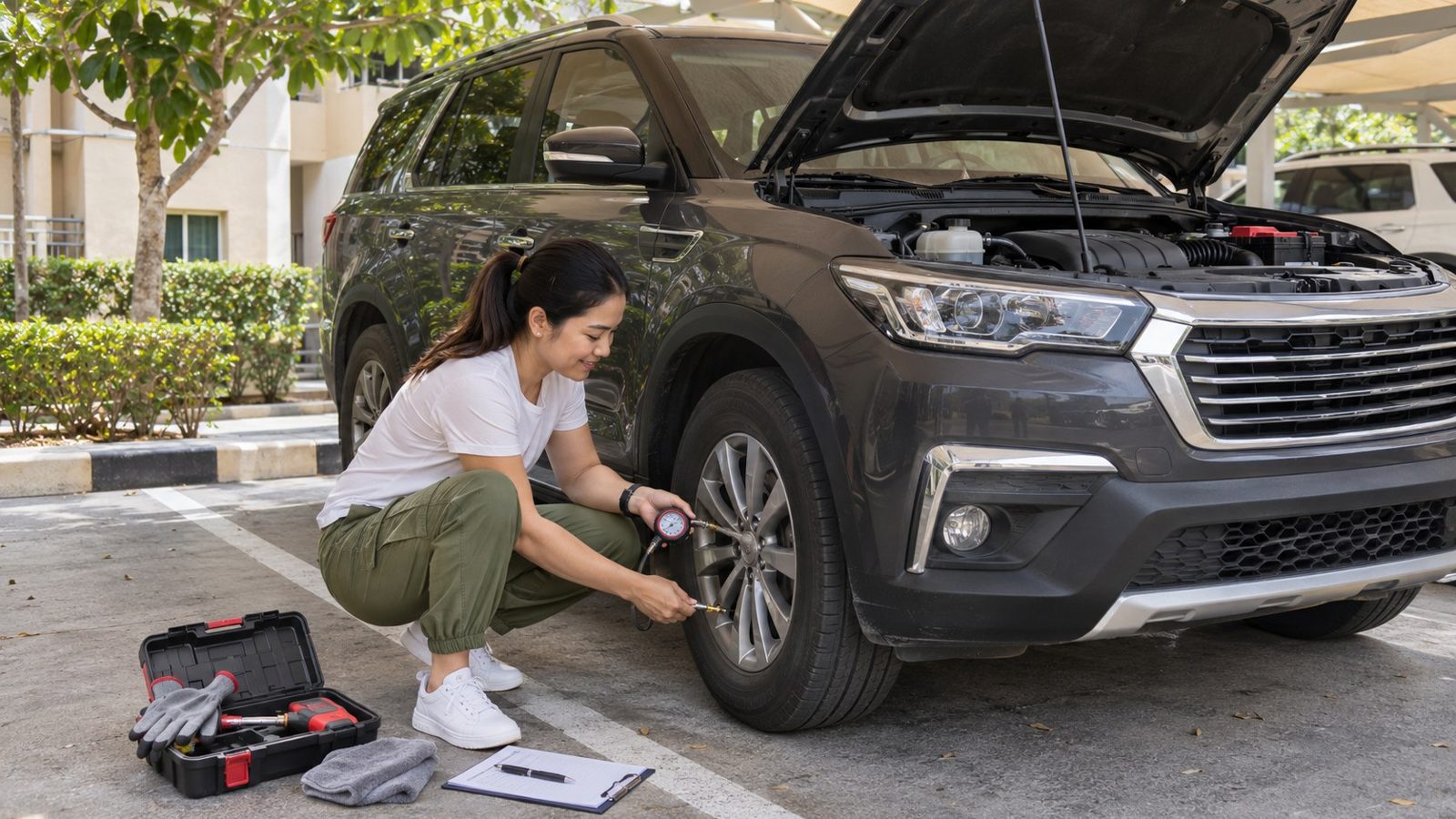
Check tyre pressure using a reliable gauge when the tyres are cold, ideally before driving or after they've been parked long enough to cool.
Use the pressure recommended by the vehicle manufacturer, not the maximum number on the tyre's sidewall.
Don't forget the spare tyre if your vehicle has one.
If you notice a bulge, deep damage or a tyre that repeatedly loses pressure, arrange professional inspection promptly.
Abu Dhabi Police has repeatedly warned UAE motorists about the danger of damaged and unsuitable tyres, particularly during hot weather.
A simple visual check cannot replace a professional tyre assessment, but it may help you spot a warning sign early.
Minute 5–7: Look underneath the car
You don't need to crawl beneath the vehicle.
Just check the ground where it has been parked.
A small amount of clear water beneath the AC system can be normal condensation.
But oily, coloured or unusual-looking fluid may indicate a leak.
If you notice a new leak, photograph it and contact a qualified workshop.
Don't touch or taste the fluid to identify it.
If there's a major leak, an overheating warning or a braking problem, don't continue driving.
Have the vehicle assessed safely.
Minute 8–10: Check accessible fluids
Depending on your vehicle, you may be able to inspect the engine oil level, windscreen-washer fluid and coolant reservoir level.
Follow the owner's manual.
Some modern vehicles use electronic oil-level checks rather than a traditional dipstick.
Never open a hot, pressurised coolant reservoir.
And don't add fluids simply because the containers look unfamiliar.
Using the wrong fluid can damage components.
For electric and hybrid vehicles, some cooling and high-voltage-related systems require specialist servicing.
If you're unsure, leave the inspection to a qualified technician.
Minute 11–12: Test the lights and wipers
Switch on the headlights, indicators, brake lights and hazard lights.
Where practical, ask someone to help check the brake lights or use a safe reflection to confirm they're operating.
Then inspect your windscreen wipers.
The UAE's hot weather and dust can be tough on rubber components.
If the wipers are cracked, noisy or leaving streaks, it may be time to replace them.
Also top up your washer fluid using a suitable product if required.
You don't want to discover your wipers are useless during a sudden rainstorm.
Minute 13–14: Pay attention to the dashboard
Start the vehicle according to the manufacturer's instructions.
Check for persistent warning messages.
Some warning lights briefly illuminate during startup as part of a normal system check.
But persistent warnings need attention.
A red oil-pressure warning, serious overheating warning or braking-system warning should never be ignored.
If a warning indicates an immediate safety risk, stop in a safe place and follow the owner's manual or contact roadside assistance.
Don't clear fault codes just to make a warning disappear.
The problem may still be there.
Minute 15: Think about what changed
Finally, ask yourself three questions.
Does the car sound different?
Does it drive differently?
Is anything taking longer than usual to work?
Maybe the AC isn't cooling as quickly.
Maybe the steering feels unusual.
Maybe you've noticed a vibration on the highway.
Write it down.
A clear description helps the technician diagnose the problem if you eventually need an appointment.
What about service intervals?
These monthly checks are not a substitute for scheduled servicing.
Your car may need maintenance based on time, mileage or operating conditions.
Follow the manufacturer's schedule for your exact vehicle and UAE specification.
Don't rely solely on a generic internet recommendation to change oil every fixed number of kilometres.
And keep all service records, especially if the car is under warranty.
An easy habit that actually works
Set a monthly reminder.
Choose a weekend morning when the car is cool and parked safely.
Keep a tyre-pressure gauge and a small flashlight handy.
It doesn't have to take exactly fifteen minutes.
Some checks will take longer, and if anything is unclear, ask a professional.
The point is consistency.
Your car shouldn't need to break down before you start paying attention to it.
Save this checklist
- Tyre pressure and visible condition
- Spare tyre, where fitted
- Ground underneath the car
- Accessible fluid levels
- Headlights and indicators
- Brake lights
- Windscreen wipers and washer fluid
- Dashboard warnings
- New noises, vibrations or driving changes
- Next scheduled service date
Editorial references
Last editorial review: 11 November 2026. Always follow your vehicle's owner's manual and leave hazardous or high-voltage maintenance to qualified professionals.