Chinese Cars vs Japanese Cars: Is the Reliability Gap Still Real?
Are Chinese cars as reliable as Japanese cars? Compare long-term reliability, resale value, features, servicing and ownership in the UAE.
By SiniDrive Editorial
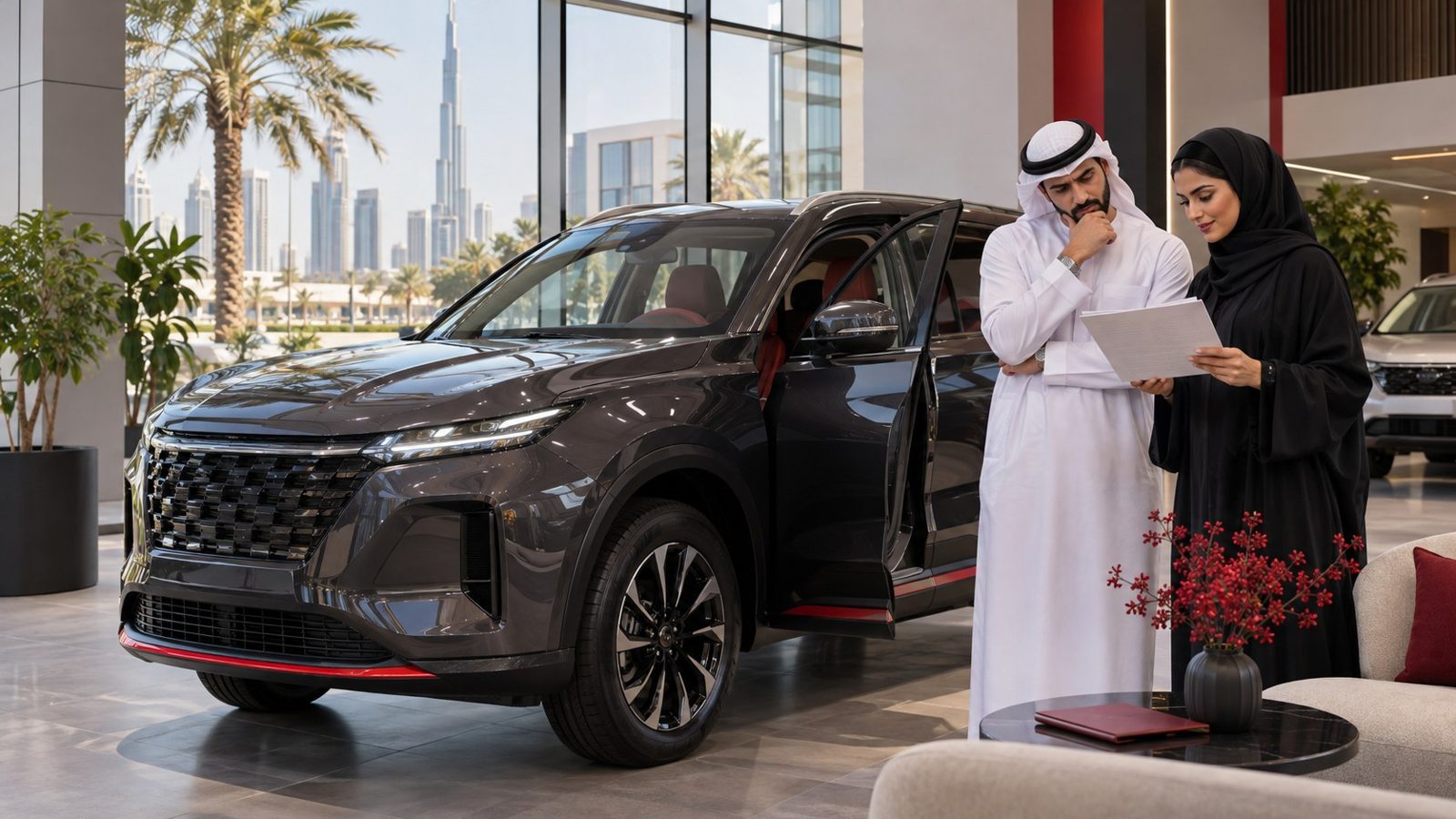
Picture a conversation happening in thousands of UAE households.
Someone announces they're buying a new car.
They've found a Chinese SUV with a beautiful interior, plenty of technology and a very attractive price.
Then someone in the family asks:
"Why don't you just buy a Toyota?"
And there it is.
The question that has followed Chinese cars for years.
Can you really trust a Chinese car as much as a Japanese one?
It's a fair question.
But it's also a question that deserves a better answer than a simple yes or no.
Why do people trust Japanese cars?
Toyota, Honda, Nissan, Mazda and other Japanese manufacturers have spent decades building reputations in the global automotive market.
Many UAE drivers have personal experience with these brands.
They know people who have driven them for years.
They've seen older vehicles on the road.
They know where to buy spare parts and where to find mechanics.
That familiarity creates confidence.
A reputation built over decades doesn't disappear simply because a newer competitor offers a bigger screen and more features.
And it shouldn't.
A long ownership record is genuinely valuable when assessing reliability.
But Chinese cars aren't what they used to be
China has become a major force in the global automotive industry.
Manufacturers have invested heavily in electric vehicles, battery technology, vehicle platforms, design and manufacturing.
Several Chinese brands now compete internationally across different market segments.
But there's an important distinction between technological progress and proven long-term reliability.
A car can look sophisticated, drive beautifully and offer advanced electronics while still having limited public data about how it performs after eight or ten years.
That's not evidence that it will fail.
It's simply uncertainty.
Being new doesn't automatically make a car unreliable. But being new can mean there is less evidence of long-term durability.
The mistake of comparing countries instead of cars
Let's imagine you're comparing two vehicles.
One is a Japanese sedan with a naturally aspirated engine and simple equipment.
The other is a Chinese SUV with a turbocharged engine, dual-clutch transmission and numerous electronic features.
Which one will be cheaper to maintain?
You can't know from the country of origin alone.
The vehicles are completely different.
Now imagine comparing a Chinese electric vehicle with a Japanese petrol-powered SUV.
Again, the engineering, maintenance requirements and potential failure points are different.
It's much more useful to compare specific models with similar body styles, prices and powertrains.
Look at their mechanical designs, service schedules, available reliability information and ownership support.
Country of origin is one piece of context, not the complete answer.
What does long-term reliability really mean?
Reliability isn't simply whether a car starts every morning.
It also involves how frequently problems occur, how serious those problems are and how easily they can be resolved.
Consider these situations.
Car A develops a minor electronic issue that the dealer fixes in one day.
Car B has a mechanical problem but requires several weeks for a replacement part.
Car C runs for five years with routine servicing and no significant problems.
Each ownership experience is different.
To make a meaningful reliability comparison, we'd ideally need large, representative samples of vehicles with similar age, mileage, maintenance and operating conditions.
For many newer Chinese models in the UAE, that depth of long-term information isn't yet available.
So be cautious when someone declares an entire brand either completely reliable or completely unreliable based on a handful of stories.
The resale-value advantage
This is where established Japanese brands can have an important advantage.
A strong used-car market, long-standing reputation and widely available repair support can make vehicles easier to evaluate and sell.
Some Chinese brands have growing visibility in the UAE, but used-market demand and depreciation can still vary significantly by model.
If you plan to sell after two or three years, research resale performance carefully.
Don't compare a new Chinese SUV against an old Toyota using only the purchase price.
Consider depreciation, insurance, servicing, financing and the overall ownership period.
Also remember that a relatively low used-car price can work in your favour if you're buying second-hand rather than selling.
Chinese cars can offer more equipment for your budget
Now let's give Chinese brands credit where it's due.
Many compete aggressively on value.
Buyers can sometimes get larger screens, premium-looking interiors, advanced parking assistance, ventilated seats and other features without moving into a much higher price bracket.
These features can genuinely improve daily driving.
But don't let the equipment list become the only comparison.
A comfortable driving position, good air-conditioning performance, predictable braking and a well-tuned suspension may be more valuable than a spectacular infotainment interface.
Test-drive both vehicles on roads similar to those you actually use.
The real question is what happens when something goes wrong
Let's say you're travelling from Dubai to Ras Al Khaimah with your family.
Your vehicle develops a fault.
You need roadside assistance, a workshop and perhaps a replacement part.
At that moment, the distributor's after-sales network becomes very important.
Many established Japanese brands benefit from widespread independent repair knowledge and parts suppliers in the UAE.
Chinese brands may also have strong distributor support, but the depth and reach of that support vary.
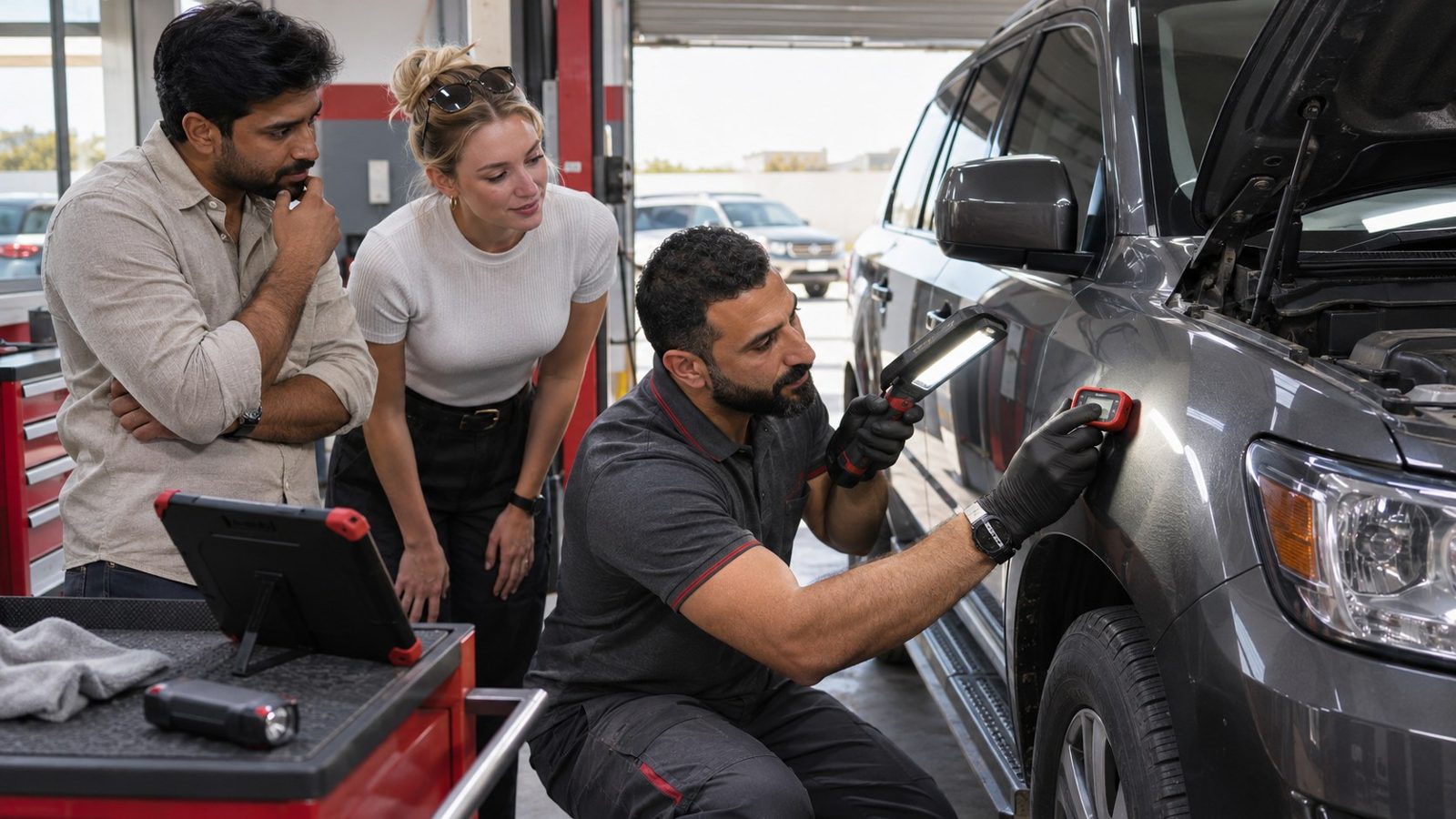
Ask how many authorised service locations are available, whether technicians are familiar with the model and how major replacement parts are sourced.
This is a much better measure of ownership confidence than showroom appearance alone.
What about safety?
Don't assume a car is safe because it's Japanese.
And don't assume a Chinese vehicle is unsafe because of its origin.
Look for independent crash-test results for the exact model and relevant market specification.
Check standard safety equipment, airbags, electronic stability control, emergency braking and other driver-assistance systems.
Remember that a crash-test result for one version of a vehicle may not apply to every version sold worldwide.
Also distinguish between safety technology and convenience technology.
A huge screen doesn't make a car safer.
Which is better for a family?
That depends on the family.
If you expect to keep your car for many years and value a long-established repair ecosystem, a proven Japanese model may be more reassuring.
If your priority is generous equipment, a modern cabin, comfortable daily driving and strong value, a well-supported Chinese model may be very attractive.
If you drive unusually high mileage, look closely at maintenance requirements and long-term experience.
If you're buying an EV or plug-in hybrid, investigate battery warranty, charging infrastructure, software support and relevant service capability.
There isn't one answer for every family.
Here's how I would compare them
Forget the badge for a moment.
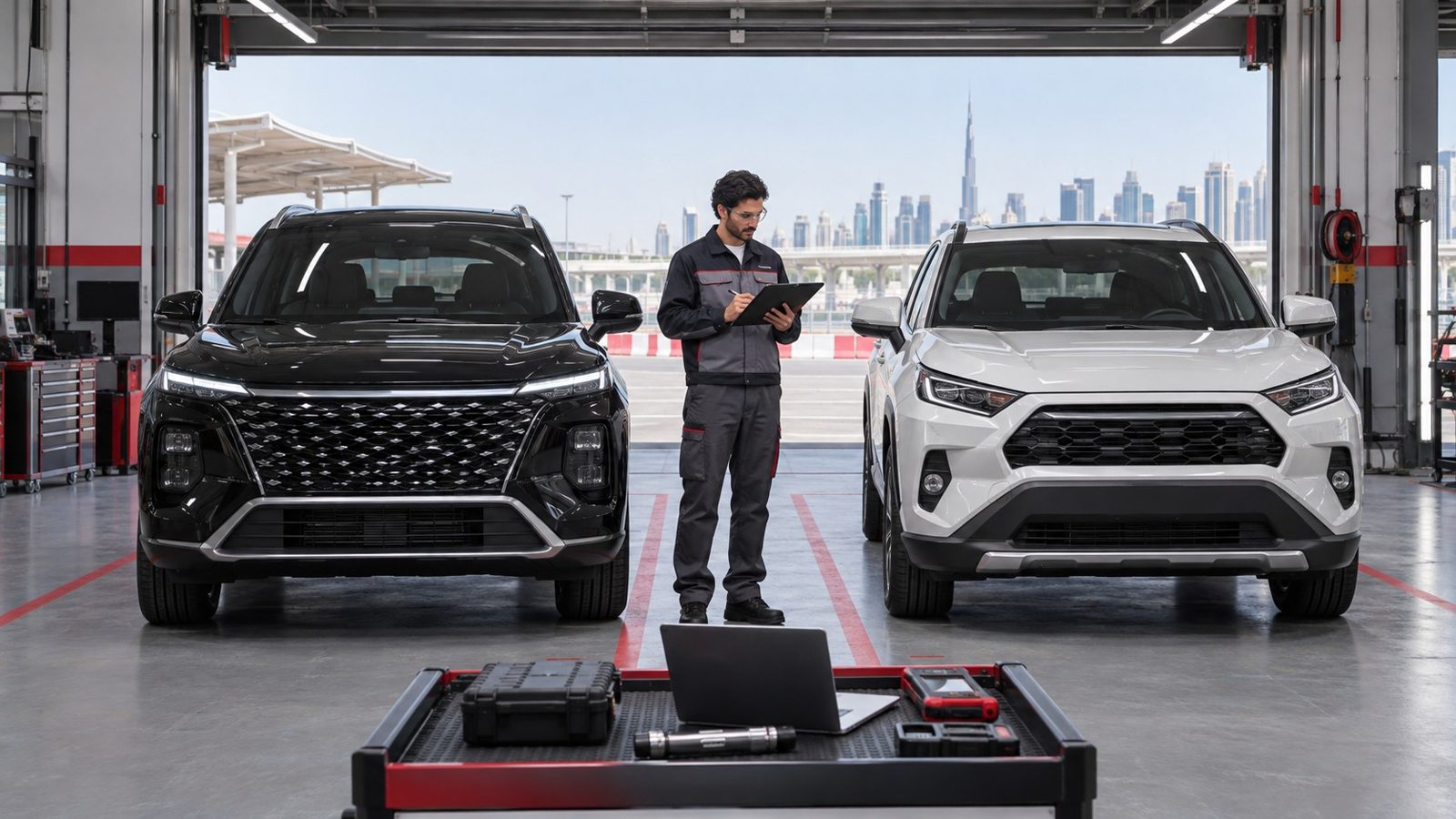
Put the two cars side by side.
Compare their actual prices, service plans, insurance quotations, warranty terms and available safety information.
Drive both.
Speak to owners where possible.
Check the UAE dealer network.
Research used examples.
Then decide which compromises matter most to you.
An expensive car isn't necessarily the best car.
And an affordable car isn't automatically a risky one.
The reliability gap: what's the verdict?
Japanese manufacturers generally benefit from longer, better-established ownership histories and service ecosystems.
Many Chinese manufacturers have made significant progress in technology, equipment and international competitiveness.
However, it's too broad to claim that the reliability gap has disappeared across all brands and models.
It's equally unfair to assume every Chinese vehicle is unreliable.
The sensible approach is to investigate the exact car you're considering.
Don't buy a Chinese car simply because it's cheaper. Don't buy a Japanese car simply because everyone tells you to. Buy the one you can confidently live with.
How to compare two cars properly
Score each vehicle on:
- Purchase price and financing
- Independent safety information
- Long-term reliability evidence
- Warranty coverage
- Authorised service access
- Spare-parts availability
- Comfort and driving experience
- Fuel economy
- Insurance costs
- Resale-market evidence
Not every category needs equal weight. Decide what's important to you before you walk into a showroom.
Editorial references
- DubiCars — Chinese Cars in the UAE
- DubiCars — Chinese Cars and Resale Value
- DubiCars — Official Chinese Car Dealers
Last editorial review: 11 November 2026. This article does not claim an independently measured brand-by-brand reliability ranking.