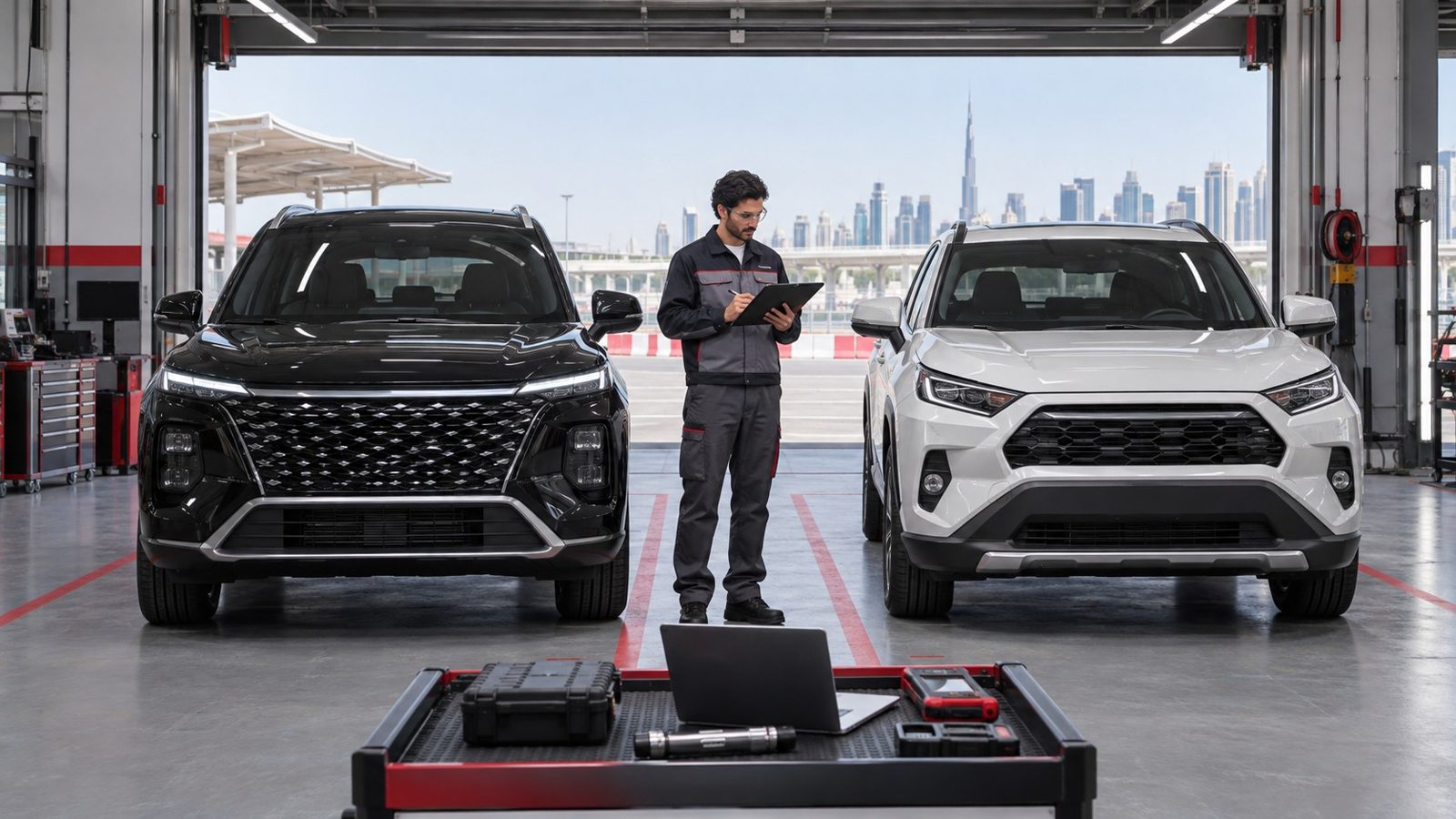
Everyone Loves the Price. But Should You Really Buy a Chinese Car in the UAE?
Chinese cars offer impressive features and competitive prices in the UAE. But what about reliability, resale value, warranty and spare parts?
By SiniDrive Editorial
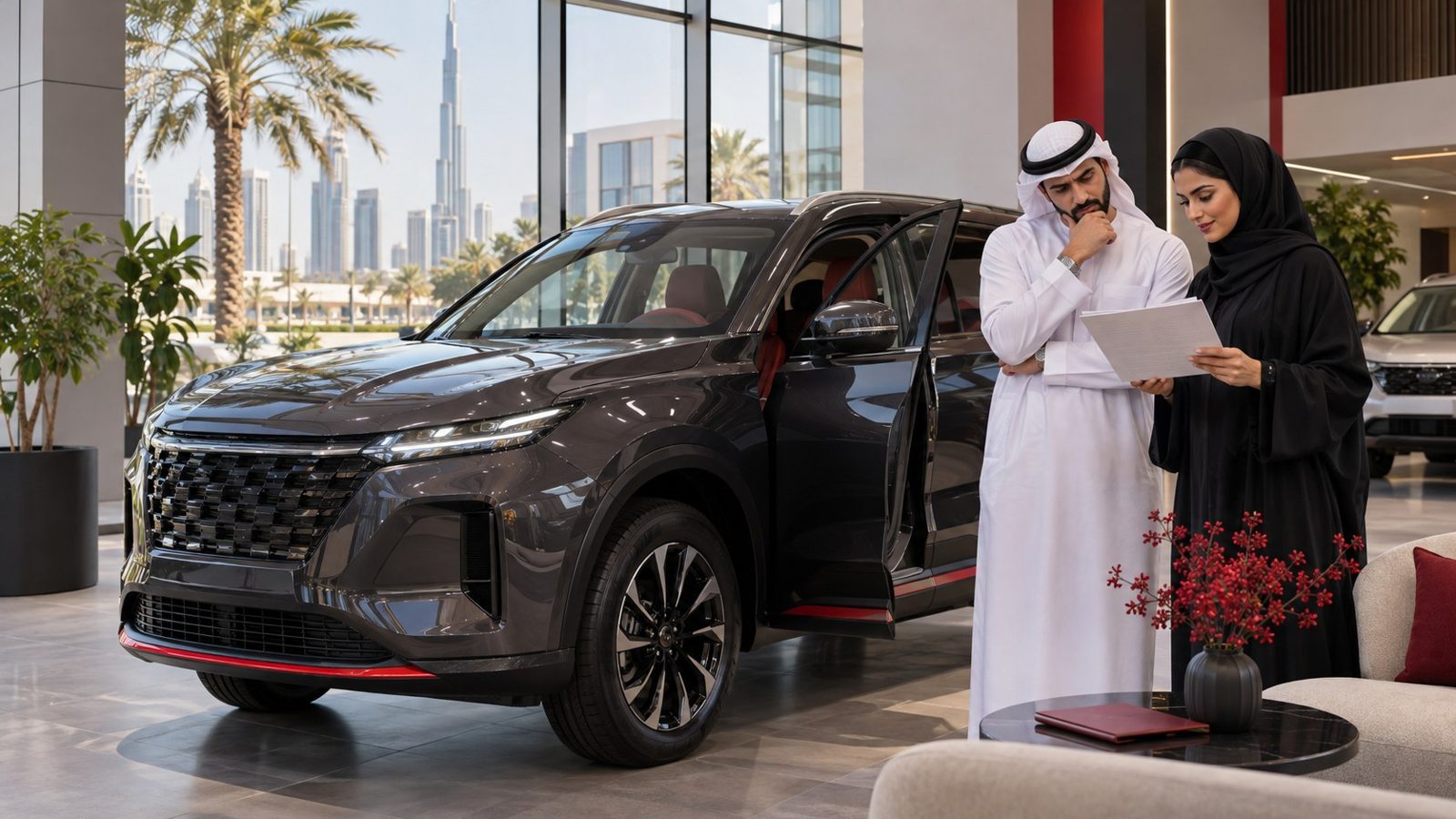
You've spent three weekends looking for a new family SUV.
The Toyota you like is above your budget. The Korean SUV doesn't have all the features you want. Then, almost by accident, you walk into a Chinese car showroom.
The salesperson opens the door.
A huge touchscreen. Panoramic sunroof. Ventilated seats. A 360-degree camera. A beautiful interior.
Then comes the price.
You look at your wife. She looks at you.
For the first time in weeks, you've found a car that seems to tick every box.
But later that evening, you mention it to your friends.
One says, "Chinese car? Are you serious?"
Another asks, "What happens when you try to sell it?"
And suddenly, that amazing deal doesn't feel quite so simple.
So who's right? The showroom or your friends?
The answer is somewhere in between.
First, forget the idea that all Chinese cars are the same
Imagine someone telling you that every Japanese car is identical.
You'd probably laugh.
A Toyota Land Cruiser, Nissan Sunny and Lexus RX are very different vehicles, even though they come from Japanese brands.
The same logic applies to Chinese cars.
BYD, Chery, Geely, GAC, Jetour, Changan and other manufacturers have different engineering approaches, model histories, ownership experiences and dealer networks.
Some have a substantial international presence. Others are relatively new to the UAE.
So rather than asking, "Are Chinese cars reliable?" ask a better question:
"Is this particular model, from this manufacturer, a good choice for how I drive and how long I plan to keep it?"
That question gets you much closer to a sensible decision.
Why are Chinese cars sometimes so much cheaper?
Walk into a few UAE showrooms and you'll notice something interesting.
A Chinese SUV may offer equipment that costs significantly more in some competing vehicles.
Digital displays, electric seats, advanced parking cameras and panoramic roofs are often part of the appeal.
Competitive manufacturing, aggressive pricing and different brand strategies can help explain the difference.
But here's something important.
A lower selling price doesn't automatically mean inferior quality. And more equipment doesn't automatically mean a better car.
An attractive cabin is wonderful. But you also need to care about ride comfort, braking, build quality, safety, servicing and how well everything works after several years.
A big touchscreen is less exciting when the air-conditioning controls are difficult to access while driving.
That's why a proper test drive matters more than an impressive showroom demonstration.
The resale value question nobody wants to ignore
Let's say you buy a car for AED 90,000.
Three years later, you're planning to upgrade.
How much can you sell it for?
That's where the uncertainty begins.
Established brands in the UAE benefit from long trading histories, widespread service networks and large used-car markets.
Some newer Chinese models don't yet have the same amount of reliable resale history.
That doesn't automatically mean they'll lose enormous value. It means predicting their future resale price can be harder.
Before buying, search for used examples of the same model, preferably from different model years.
Look at asking prices and how many cars are advertised. Remember that asking prices are not confirmed selling prices.
Ask dealers for written trade-in quotations, and compare them with competing models.
If you expect to change cars every two or three years, resale value deserves serious attention.
If you plan to keep the car for seven or eight years, your priorities may be different.
What about reliability?
This is probably the biggest emotional barrier.
Many drivers grew up hearing that Japanese cars last forever and Chinese cars are cheaply made.
There are good reasons to respect brands with decades of proven ownership history.
But the Chinese automotive industry has also changed substantially.
What buyers shouldn't do is replace one assumption with another.
Neither "all Chinese cars are unreliable" nor "Chinese cars are now better than Japanese cars" is a useful way to shop.
Instead, investigate your chosen model.
Does it have an established engine and gearbox? Are there credible long-term owner reports? Has the manufacturer issued recalls? Does the UAE distributor have properly equipped service facilities?
And perhaps most importantly, can the dealer solve a problem when something goes wrong?
The real test is after you've bought it
Imagine your car develops an air-conditioning problem in July.
The warranty is still active.
You're not particularly interested in how advanced the infotainment system is anymore.
You want three things:
-
Someone to answer your call.
-
A technician who understands the problem.
-
The correct replacement part without an unreasonable delay.
That's why the dealer matters nearly as much as the vehicle.
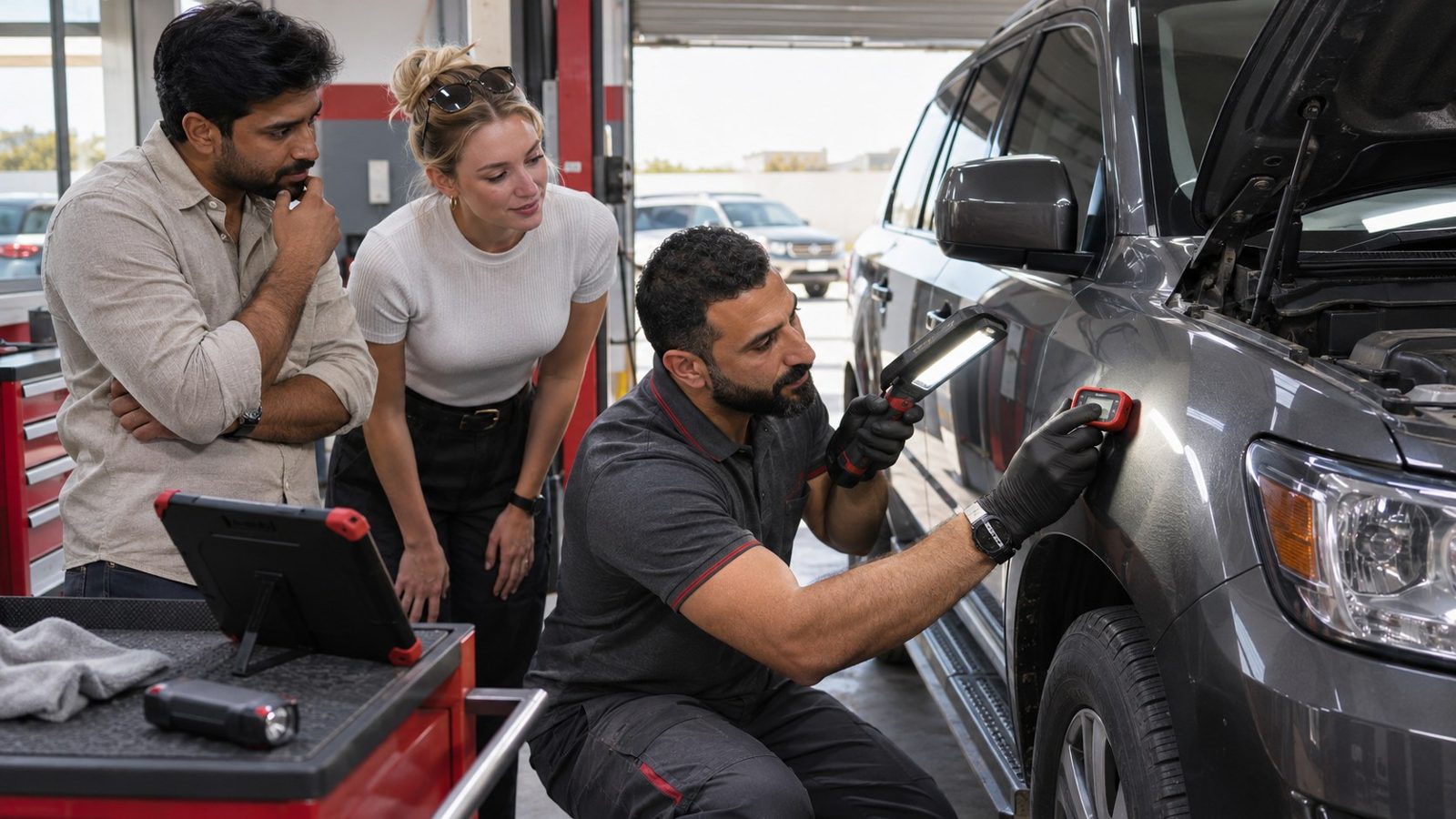
Before signing anything, ask where the nearest service centre is, what warranty conditions apply and whether common replacement parts are stocked locally.
Don't accept a vague promise that "everything is covered."
Ask for the actual warranty document.
Take the car for a proper test drive
Not the five-minute drive around the showroom.
Take the route that resembles your life.
If you drive from Sharjah to Dubai every morning, ask for a drive that includes traffic, acceleration and a highway section where permitted.
Check the air conditioning, cabin noise, suspension, visibility and seat comfort.
Try parking it.
If you have children, check whether their car seats fit comfortably and whether the boot holds your usual family luggage.
Pay attention to whether the safety alerts help or constantly distract you.
A car should make your daily life easier, not simply impress you for twenty minutes.
So, should you buy one?
Yes, a Chinese car can be a sensible purchase in the UAE.
But not every Chinese car is a sensible purchase for every buyer.
You may find excellent value if you choose a well-supported model, understand its warranty, check servicing and parts availability, and are comfortable with the resale uncertainty.
You may prefer an established Japanese or Korean model if predictable resale value and a long record of reliability matter more to you than equipment or purchase price.
Neither decision is wrong.
The mistake is buying a car because it's cheap, or refusing to consider one simply because it's Chinese.
Buy the car that makes sense after the excitement wears off.
That's the one you'll enjoy living with.
Your SiniDrive checklist
Before paying a booking amount, confirm:
- The car is officially supplied in the UAE.
- Warranty terms and servicing requirements are available in writing.
- An authorised workshop is reasonably accessible.
- Important spare parts can be sourced.
- You have compared comprehensive insurance quotations.
- You have checked the used market for similar models.
- You have taken a proper test drive.
Editorial references
Last editorial review: 11 November 2026. Individual model reliability and resale performance should be verified separately.