Thinking of Buying a Used Chinese SUV in the UAE? Read This First
Buying a used Chinese SUV in Dubai, Sharjah or Ajman? Learn how to check accident history, warranty, mileage, parts and vehicle condition.
By SiniDrive Editorial
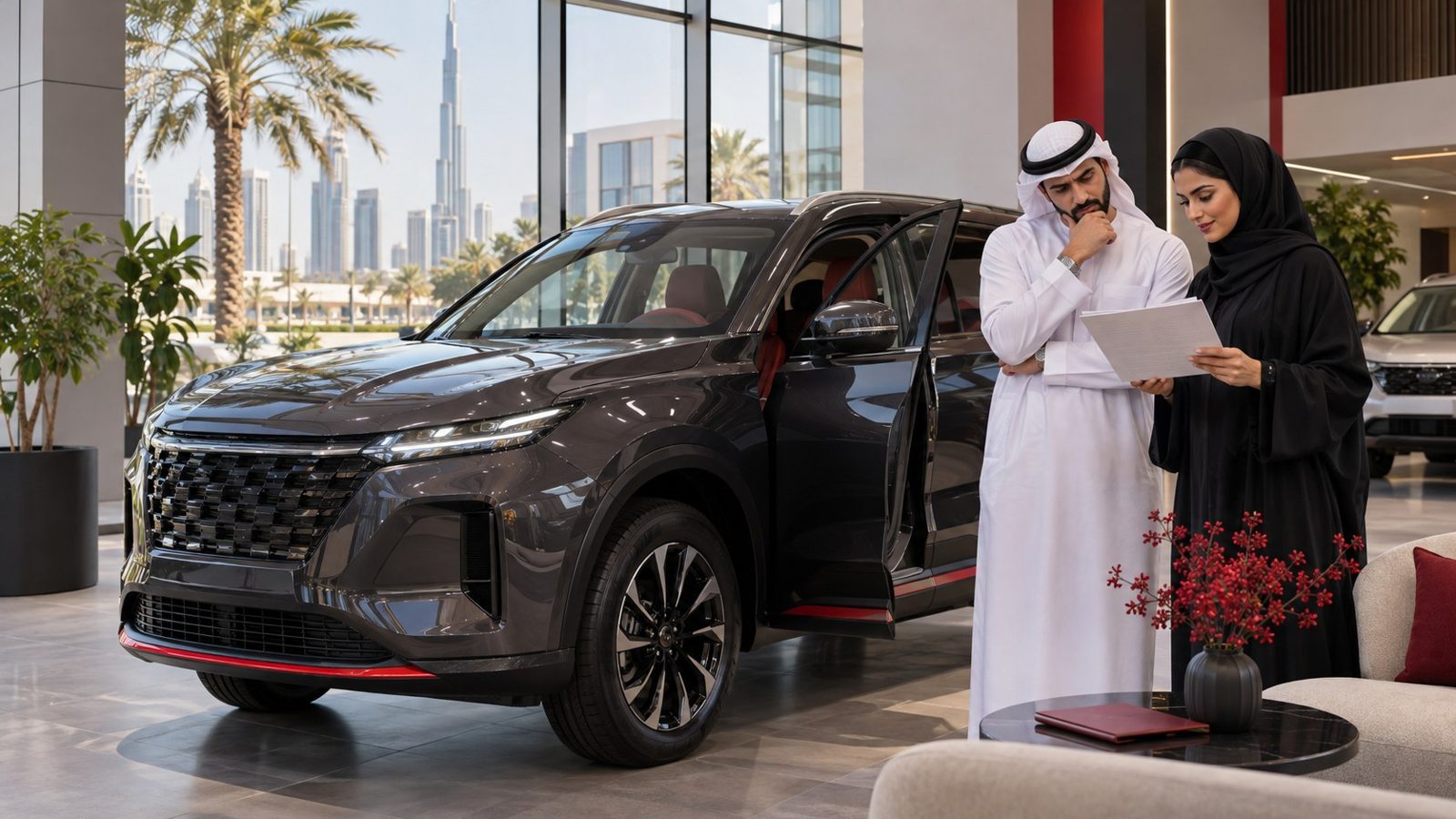
You're scrolling through used-car listings late at night.
Then you see something interesting.
A modern Chinese SUV. Beautiful interior. Panoramic sunroof. Large touchscreen. Plenty of space.
The price seems surprisingly reasonable.
You check the mileage.
Not bad.
You check the photographs again.
Still looks great.
Then you ask yourself the same question every second-hand car buyer eventually asks.
"Why is it so cheap? Is there something wrong with it?"
Sometimes a used car is genuinely good value.
Sometimes there's a reason the price is lower.
Your job is to understand the difference before paying.
First, stop judging a used car by its photographs
A freshly polished vehicle can look fantastic in photographs.
The leather looks clean. The bodywork shines. The dashboard screen is switched on.
But pictures won't tell you everything.
They may not reveal accident repairs, worn suspension, water damage, poor maintenance or problems with electronic systems.
That applies to used Chinese, Japanese, Korean and European cars alike.
The first rule is simple:
Never replace a proper vehicle inspection with a good-looking advertisement.
1. Check who originally sold the car
Ask whether the vehicle was supplied through an authorised UAE distributor.
This matters because an independently imported vehicle might have different warranty arrangements, market specifications and support options.
Check the VIN, registration documents and available import history.
If the seller claims the vehicle has GCC specifications, ask for documentary confirmation.
Don't rely on a small sticker or verbal assurance alone.
2. Investigate the accident history
Before making a serious commitment, request the Vehicle Identification Number.
Use applicable official UAE channels to check available accident information.
The Ministry of Interior and other government-linked services provide access to certain vehicle-related records.
But understand the limitation.
An accident-history search may not capture every collision, private repair or event outside the relevant reporting systems.
A clean result is useful.
It isn't proof that the vehicle has never been damaged.
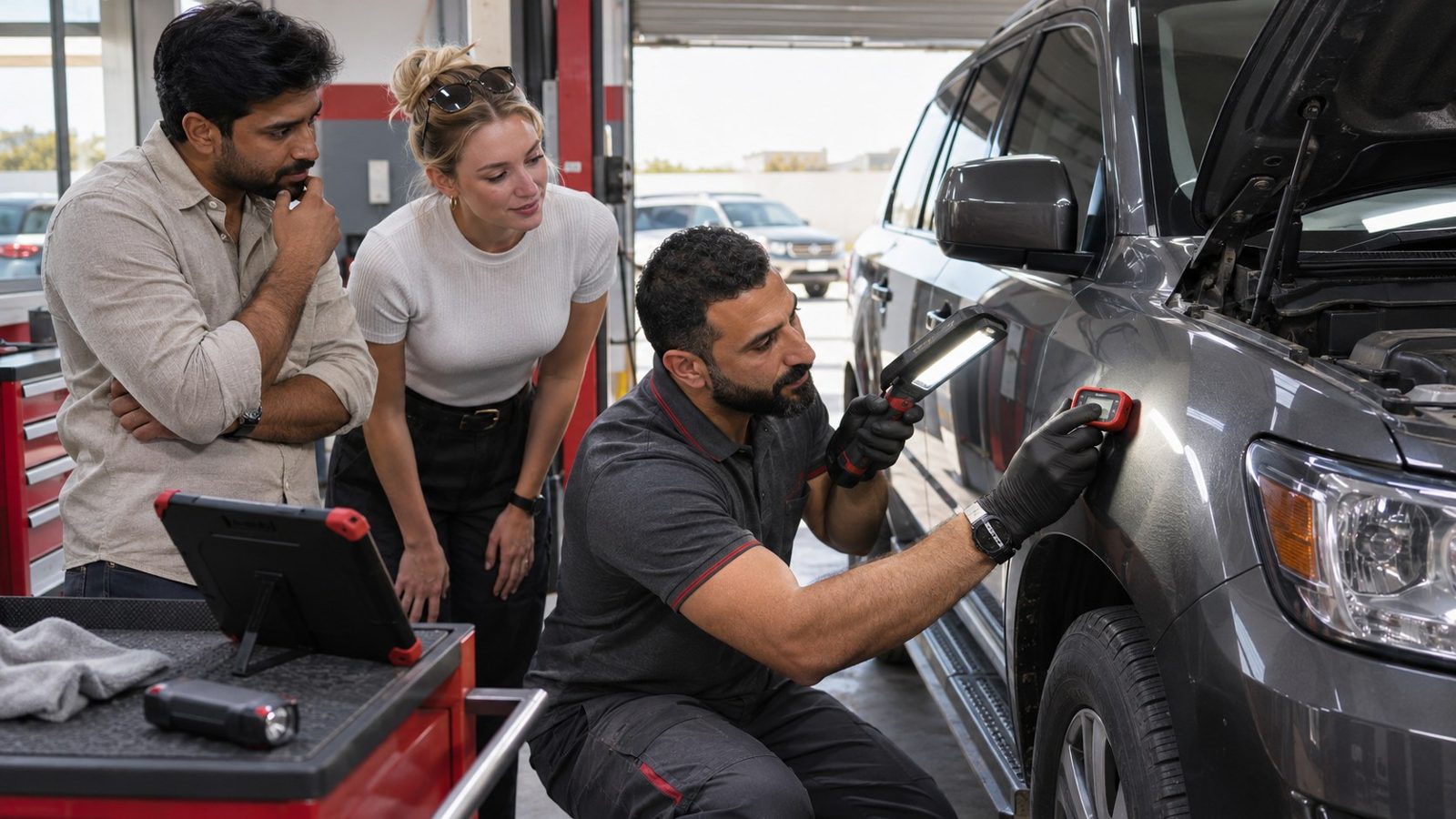
Also inspect body-panel gaps, paint consistency, structural areas and signs of previous repair.
Preferably, let an independent professional handle this assessment.
3. Don't skip the pre-purchase inspection
This may be the most valuable expense of the entire buying process.
Arrange an independent inspection from a workshop experienced with the exact manufacturer and model.
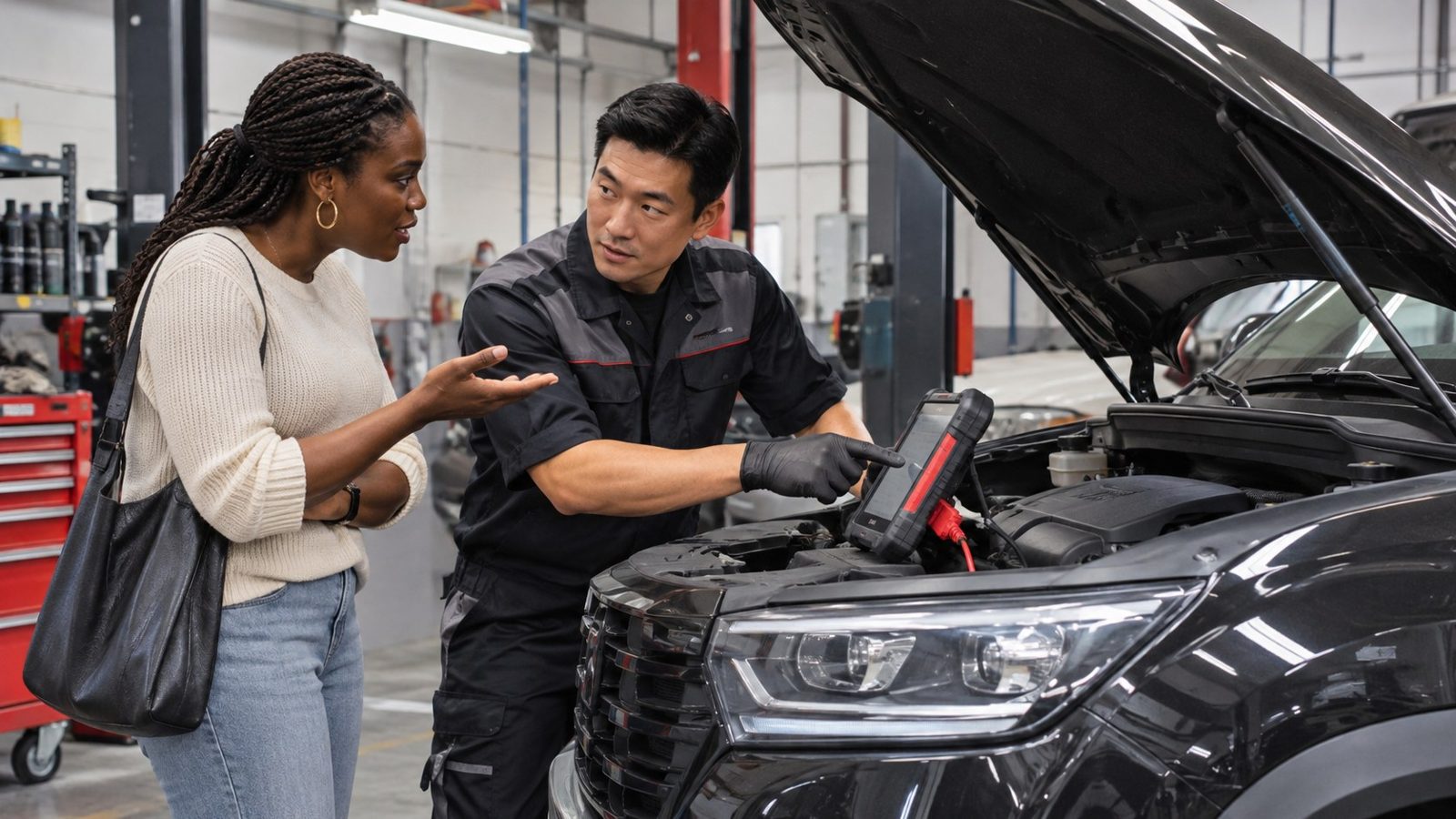
Ask the inspector to examine mechanical condition, brakes, tyres, suspension, cooling, electronics and signs of collision damage.
Request a diagnostic scan and written findings.
For hybrid or electric vehicles, ask for an appropriate battery-health assessment and verification of the relevant high-voltage systems by a qualified technician.
The inspector should be independent of the seller.
If a seller refuses a reasonable inspection request, consider that a warning sign.
4. Confirm the warranty can be transferred
Here's a common mistake.
The advertisement says:
"Still under manufacturer warranty."
Excellent.
But is that warranty transferable to you?
Does it depend on maintaining an uninterrupted service history?
Does it cover the full vehicle or only selected components?
Are there mileage limits?
Call the authorised distributor and ask them to confirm eligibility for the specific VIN in writing.
That one phone call can prevent an unpleasant surprise later.
5. Look carefully at the service history
A low-mileage vehicle is attractive.
But maintenance history matters too.
Ask for invoices, digital service records or authorised workshop records.
Check whether scheduled services were completed at the required times or mileage.
Pay attention to missed services, repeated complaints and large unexplained repairs.
A vehicle with slightly higher mileage and excellent documentation may be a better choice than a neglected example with fewer kilometres.
6. Test the features you actually care about
One reason many buyers consider Chinese SUVs is the generous equipment.
So make sure that equipment still works.
Check:
- Air conditioning and rear AC outlets
- Touchscreen and digital instrument display
- Parking cameras and sensors
- Electric seats and windows
- Panoramic roof mechanisms
- Smartphone connectivity
- Driver-assistance warnings and controls
- Remote keys and manufacturer apps
If something isn't working, don't automatically assume it's a cheap fix.
Ask for a diagnosis and repair quotation before agreeing on the price.
7. Understand the used-car market
A used Chinese SUV may offer excellent equipment for the money.
But don't assume every discounted vehicle is a bargain.
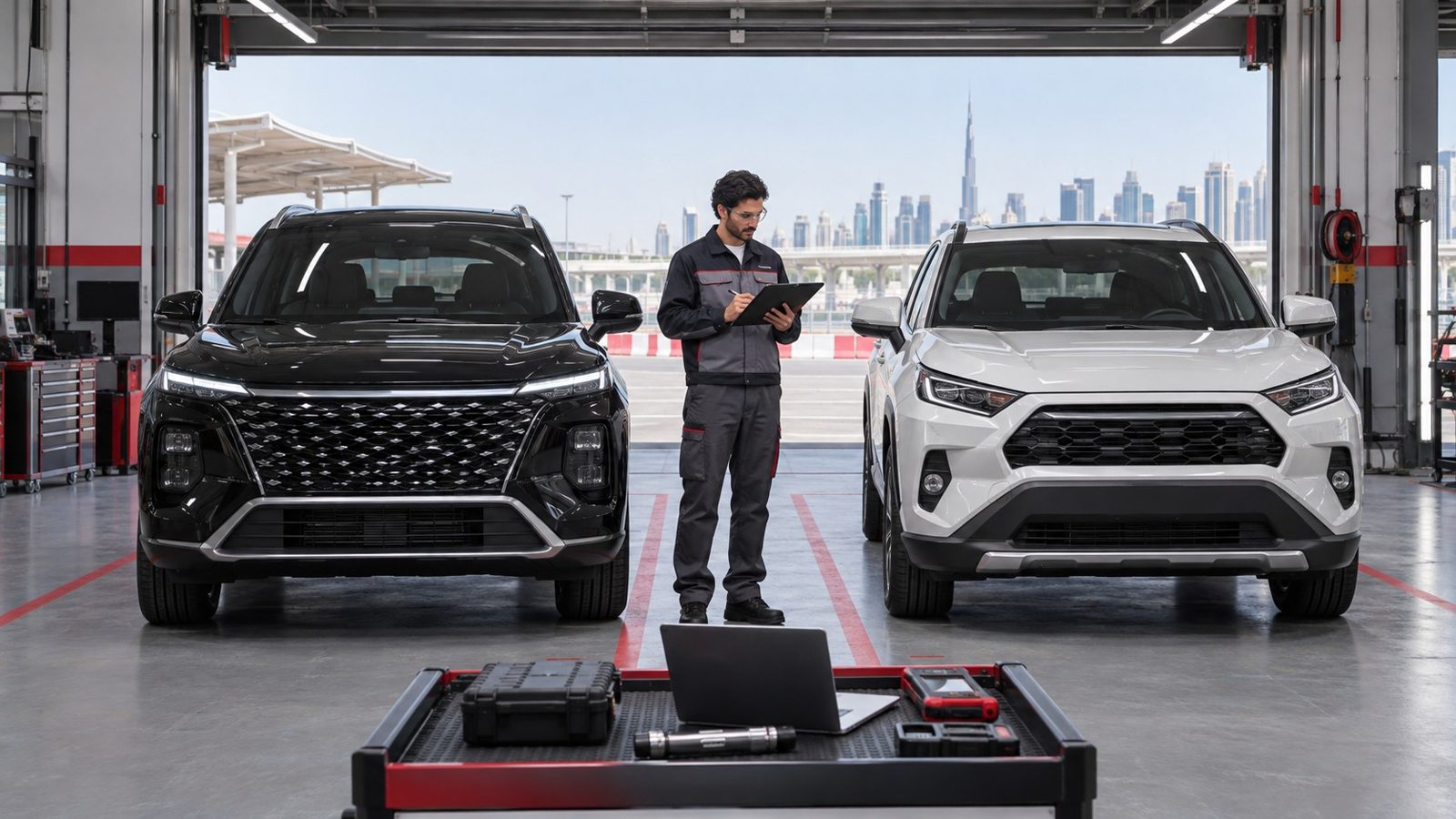
Compare several examples of the same model, year and trim.
Look at mileage, service history, accident condition and warranty status.
A clean, well-maintained vehicle should usually command more confidence than one with unclear ownership history.
Also investigate spare-parts availability and the dealer's service network.
You might save money at purchase but later face an expensive or inconvenient repair.
8. Make sure ownership transfer is possible
The UAE has formal procedures for vehicle inspection, insurance, payment of fines and ownership registration.
Some requirements vary between emirates and according to the vehicle's age and circumstances.
Check that there are no unresolved finance restrictions or other barriers to transfer.
If a vehicle is financed, the relevant bank clearance or release process needs to be completed.
Complete the ownership transfer through the applicable official channel, and do not rely on an informal agreement to prove ownership.
9. Be careful with unusually cheap offers
There's nothing wrong with negotiating.
But an unusually low price deserves extra investigation.
Maybe the seller needs cash quickly.
Maybe the car has higher mileage than competing examples.
Or perhaps it has accident damage, missing service records or unresolved mechanical issues.
Ask questions.
If the explanations keep changing, walk away.
There will be other cars.
10. Compare the total ownership cost
Suppose two similar SUVs are available.
Car A costs AED 50,000 and needs tyres, brakes and an upcoming major service.
Car B costs AED 54,000 and has fresh tyres, documented servicing and confirmed remaining warranty.
Which is cheaper?
You can't answer without knowing the cost of the work and the overall condition.
The lowest purchase price doesn't always mean the lowest ownership cost.
So, should you buy a used Chinese SUV?
Absolutely consider one.
Used Chinese SUVs can offer attractive equipment and comfort at competitive prices.
But your decision should be based on the individual vehicle, not the manufacturer's nationality.
Investigate the history, inspect the car independently, confirm warranty arrangements and understand the after-sales network.
A good used car isn't the one that looks perfect in the advertisement. It's the one that still makes sense after a proper inspection.
Used-car checklist
Before making payment, confirm:
- VIN and vehicle documents
- UAE/GCC-market specification
- Available accident-history records
- Independent pre-purchase inspection
- Mechanical and diagnostic condition
- Service history
- Warranty transfer eligibility
- Spare-parts support
- Insurance quotation
- Ownership transfer and finance clearance
Editorial references
- UAE Government — Registering Vehicles
- Invest in Dubai — Driving and Buying Cars
- UAE Ministry of Interior
Last editorial review: 11 November 2026. Official history services may not provide a complete lifetime record. An independent inspection remains important.